- Address : Morbi Unit: Sterlite Compound, Near Umiya Weigh Bridge, Matel Road, Morbi, Gujarat
- Mobile No : +91-7678699561
- sparvitsanitarywares@gmail.com,


Selecting sanitaryware is an important decision for homeowners, builders, contractors, architects, interior designers, hotels, hospitals, and commercial property developers.
A basin, water closet, urinal, cistern, or other bathroom fixture needs to perform reliably after installation. For larger projects, the importance of product consistency and dependable supply becomes even greater.
However, comparing sanitaryware manufacturers can be difficult when businesses focus only on product appearance or purchase price.
A reliable Sanitaryware Manufacturer should be evaluated on several factors, including manufacturing capability, product quality, technical specifications, material selection, consistency, product range, supply capacity, customer support, and after-sales service.
The Bureau of Indian Standards (BIS) explains that product certification involves assessment of manufacturing infrastructure, process controls, quality-control and testing capabilities, along with conformity to the relevant Indian Standard where certification applies. Buyers can therefore consider standards and certification requirements as part of their supplier evaluation.
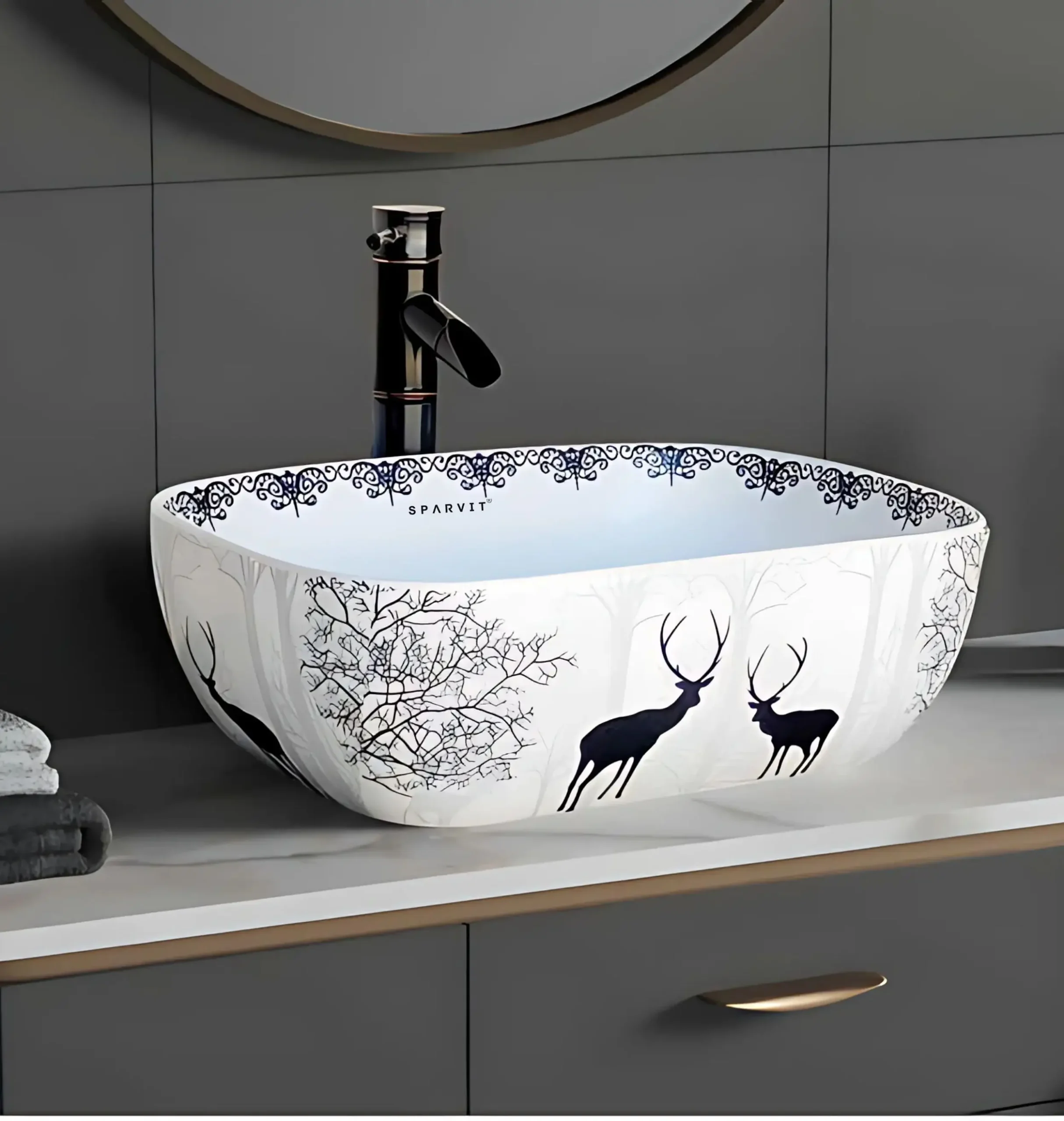
Sparvit Sanitaryware is an India-based sanitaryware manufacturer with its manufacturing base in Morbi, Gujarat, and offers products including water closets, wall hung closets, wall hung basins, table top basins, urinals, and cisterns.
The manufacturer influences more than the initial purchase.
A dependable manufacturer can contribute to:
For a single residential bathroom, these factors matter.
For a hotel, hospital, office building, residential development, or commercial project with dozens of bathrooms, they become even more important.
Experience can provide an indication of how familiar a manufacturer is with sanitaryware production and customer requirements.
However, businesses should not evaluate experience based only on the number of years claimed.
Look for evidence of:
Sparvit states that it was established in 2017 and operates from Morbi, Gujarat, a major centre for sanitaryware manufacturing.
The manufacturer’s actual capabilities should still be evaluated against the requirements of the specific project.
A genuine manufacturer should be able to explain how and where its products are manufactured.
Buyers can ask about:
This is particularly important for bulk buyers.
If a project requires hundreds of sanitaryware units, the manufacturer needs sufficient production and quality-control capability to maintain consistent specifications.
BIS notes that manufacturers seeking certification need appropriate manufacturing infrastructure, process controls, quality control, and testing capabilities for the relevant standard.
Material selection directly affects the performance and appearance of sanitaryware.
For ceramic sanitaryware, buyers can ask about:
A manufacturer should be able to provide appropriate product information rather than making only general claims about quality.
Sparvit states that it uses high-grade raw materials and applies quality checks to its sanitaryware products. Its product information also identifies ceramic sanitaryware across its basin and toilet categories.
Standards should be considered when comparing sanitaryware manufacturers.
The applicable standard depends on the particular product.
Buyers should ask:
BIS states that its product-certification framework establishes conformity with relevant Indian Standards through assessment and testing. It also notes that certification is generally voluntary unless the government makes compliance compulsory for a particular product.
Therefore, buyers should avoid assuming that every sanitaryware product automatically requires the same certification.
A reliable manufacturer should provide clear specifications for its products.
Depending on the product, these can include:
Technical information allows architects, plumbers, contractors, and buyers to determine whether the product is suitable for the intended application.
Sparvit’s website states that its product catalogue includes specifications, material information, dimensions, and available finishes.
A manufacturer with a broad product range can be useful for projects requiring coordinated bathroom solutions.
Depending on the project, the range may include:
Sparvit lists several of these categories within its sanitaryware portfolio.
A broader range can simplify procurement when multiple bathroom fixtures are required.
Consistency is especially important for large projects.
If a hotel has 100 bathrooms, buyers may expect the same basin or toilet model to maintain consistent:
Inconsistent products can complicate installation and create difficulties when replacements are required later.
Ask the manufacturer how it maintains production consistency and quality across batches.
Quality control should be part of the manufacturing process rather than an afterthought.
Buyers can ask whether products are checked for:
Sparvit states that its products undergo quality checks including crack-resistance testing, water-absorption checks, glazing and finish inspection, and flush-efficiency testing.
For larger procurement, buyers can request relevant product and testing information before finalising the order.
Buyers should be cautious if a manufacturer:
BIS also warns about misuse or imitation of the ISI mark. Buyers should verify certification claims rather than relying solely on a logo displayed by a seller.
Sparvit Sanitaryware is an Indian sanitaryware manufacturer and supplier offering bathroom products for residential, commercial, and institutional applications.
Its portfolio includes:
Sparvit states that it is based in Morbi, Gujarat and focuses on quality, design, durability, and customer satisfaction. It also highlights after-sales support as part of its offering.
For project buyers, the suitability of any manufacturer should ultimately be evaluated against the project’s product specifications, quantity requirements, installation conditions, delivery schedule, budget, and support expectations.
Identifying a reliable Sanitaryware Manufacturer in India requires more than comparing product photographs or prices.
Buyers should evaluate the manufacturer’s actual capabilities, product specifications, material quality, quality-control procedures, applicable standards, product consistency, supply capacity, packaging, delivery, warranty, and after-sales support.
For residential projects, the focus may be on design, functionality, durability, and value. For hotels, hospitals, offices, and other commercial facilities, product consistency, water efficiency, maintenance, bulk availability, and long-term support become increasingly important.
Certification and standards should also be considered appropriately for each product. BIS provides a framework for conformity assessment and explains that manufacturers seeking certification must demonstrate suitable manufacturing, process-control, quality-control, and testing capabilities.
Most importantly, businesses should evaluate the complete supplier relationship rather than selecting a manufacturer based on one feature.
Sparvit Sanitaryware offers a range of sanitaryware products for residential, commercial, and institutional applications and operates its manufacturing base in Morbi, Gujarat.
By checking manufacturing capability, product quality, technical information, consistency, supply reliability, and after-sales support before placing an order, buyers can make a more informed decision and choose sanitaryware that is appropriate for their project.
Evaluate manufacturing experience, product quality, material selection, technical specifications, quality-control processes, applicable standards, supply capacity, product consistency, warranty, and after-sales support.
Check product specifications, quantities, manufacturing capacity, consistency, lead time, packaging, delivery arrangements, warranty, replacement support, and applicable project requirements.
It depends on the specific product and applicable regulations. BIS states that certification is generally voluntary unless compliance has been made compulsory for a particular product. Buyers should verify the relevant Indian Standard and certification requirements for the product concerned.
Ask for product specifications, relevant certification information, testing details, quality-control processes, and other appropriate documentation. Certification claims should be independently verified where applicable.
Manufacturing location can influence logistics, production coordination, lead times, and delivery planning, especially for large projects.
Depending on project requirements, a manufacturer may offer water closets, wall hung closets, basins, table top basins, wall hung basins, urinals, cisterns, and other bathroom products.
Comments are closed