- Address : Morbi Unit: Sterlite Compound, Near Umiya Weigh Bridge, Matel Road, Morbi, Gujarat
- Mobile No : +91-7678699561
- sparvitsanitarywares@gmail.com,


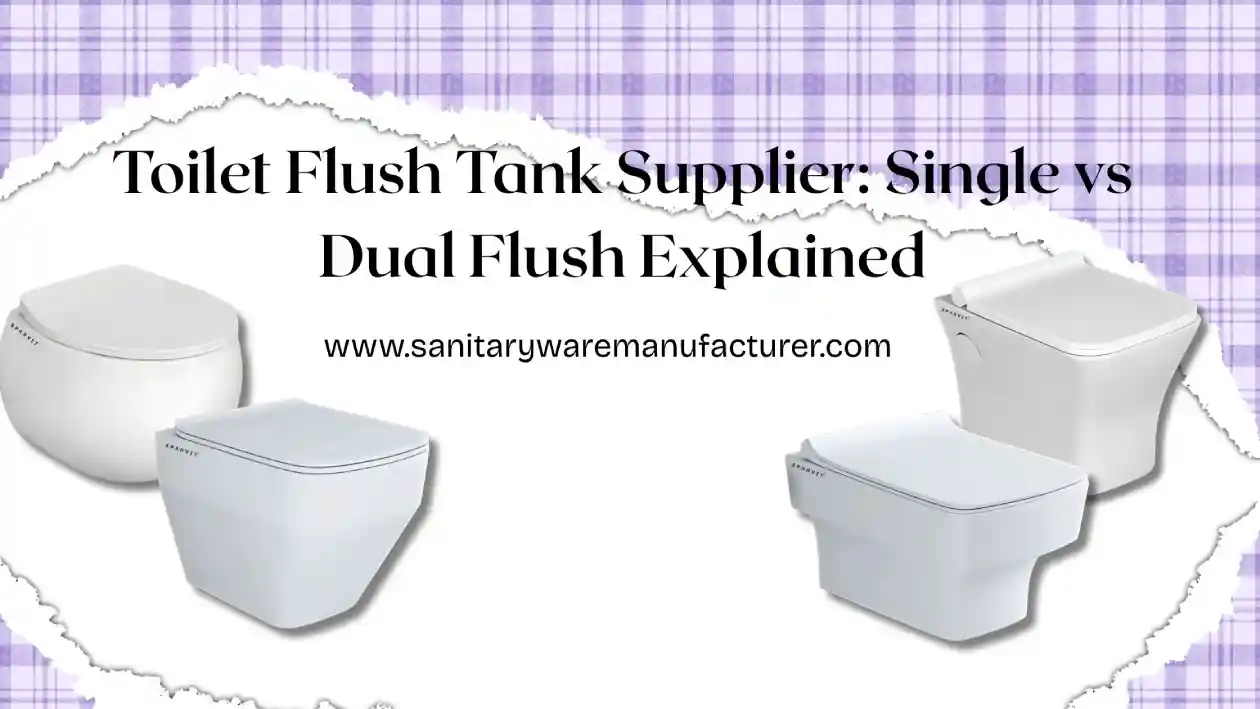
The flush tank is one of the most important components of a toilet system. It stores water and releases it into the toilet bowl when the flush mechanism is activated.
For homeowners, builders, contractors, hotels, offices and commercial property developers, selecting the right flush tank can affect bathroom functionality, water consumption and long-term maintenance.
Two common options are single flush tanks and dual flush tanks.
While both perform the same basic function, they differ in how much water they release during each flush.
Understanding these differences can help buyers select the right system for their application.
For bulk projects, working with an experienced Toilet Flush Tank Supplier can also make it easier to compare available configurations, specifications and pricing.
Sparvit Sanitaryware provides sanitaryware solutions for residential and commercial applications and can assist buyers with project-specific product requirements.
A toilet flush tank, also called a cistern, stores water until the toilet is flushed.
When the flush button, lever or mechanism is activated, water flows from the tank into the toilet bowl.
The water helps remove waste from the bowl and carries it through the drainage system.
A typical flush tank includes components such as:
The exact design varies according to the type and model of toilet.
A single flush tank uses one flush volume regardless of the type or amount of waste being removed.
When the flush is activated, the tank releases a predetermined quantity of water.
Single flush systems can be suitable for homes, rental properties, offices and projects where simplicity is a major consideration.
A dual flush tank provides two flushing options.
One option generally uses a smaller amount of water for liquid waste, while the other releases a larger volume for solid waste.
The user selects the appropriate flush through a dual-button or similar mechanism.
The actual flush volumes depend on the specific product and its configuration.
The primary difference is flush-volume control.
A single flush system releases one predetermined volume.
A dual flush system provides two different flush options.
This means a dual flush system can potentially use less water over time when users select the smaller flush appropriately.
However, actual water savings depend on user behaviour, the flush mechanism and the efficiency of the complete toilet system.
Water efficiency has become increasingly important for residential and commercial buildings.
Bathrooms can account for a significant amount of daily water use, particularly in facilities with many occupants.
A dual flush system can help manage consumption by providing a smaller flush option when a full flush is unnecessary.
This can be particularly relevant for:
For high-occupancy buildings, even relatively small reductions in water use per flush can become meaningful over time.
There is no universal answer.
The better option depends on the application.
Single flush tanks remain suitable for many residential applications.
They are straightforward to operate and can be a practical choice for homes, apartments and rental properties.
For standard bathroom installations, a single flush system may provide sufficient functionality without introducing additional operating mechanisms.
Homeowners should still consider flushing performance, water consumption and product quality before purchasing.
Commercial buildings often have high bathroom usage.
Hotels, offices, malls, restaurants and institutional buildings may have dozens or even hundreds of users throughout the day.
A dual flush system can provide users with a choice of flush volumes.
This makes it useful where water management is an important consideration.
However, commercial buyers should evaluate the complete toilet system rather than selecting the flush tank separately.
The Toilet Flush Tank Price can vary depending on several factors.
These may include:
For large projects, buyers should request a detailed quotation based on their exact requirements.
Comparing only the product’s initial price may not provide a complete picture of its long-term value.
Both types require periodic maintenance.
Single flush tanks generally have fewer operating components, which can make troubleshooting straightforward.
Dual flush systems contain additional mechanisms because they provide two flush-volume options.
Maintenance may include checking:
Leaks should be addressed promptly because even a small continuous leak can result in unnecessary water consumption.
Selecting a reliable Toilet Flush Tank Supplier is particularly important for builders and commercial buyers.
Consider:
For large projects, suppliers should also be able to communicate clearly regarding quantities and delivery schedules.
Sparvit Sanitaryware provides sanitaryware products for residential and commercial applications.
The company can support builders, contractors, developers and other buyers evaluating toilet and bathroom requirements.
When selecting a flush tank, buyers should consider the complete toilet configuration, including:
For bulk projects, buyers can provide project details and required quantities to obtain suitable product specifications and current quotations.
As a Toilet Flush Tank Supplier, Sparvit Sanitaryware can be approached for product information, availability and project-specific requirements.
Both single and dual flush tanks can provide effective toilet flushing, but they serve different priorities.
A single flush tank offers a straightforward mechanism and can be suitable for conventional residential and commercial applications where simplicity is important.
A dual flush tank provides greater control over water usage by offering two flush options. This can make it particularly useful for high-occupancy buildings, modern residential projects and commercial facilities where water management is a priority.
Before choosing a system, buyers should consider flush performance, water consumption, compatibility, material quality, maintenance, spare parts and overall cost.
Builders and contractors should also evaluate the complete toilet system rather than purchasing a flush tank independently.
Working with a reliable Toilet Flush Tank Supplier can make it easier to understand product specifications, compare options and plan bulk procurement.
Sparvit Sanitaryware provides sanitaryware solutions for residential and commercial applications and can be contacted for toilet flush tank requirements, specifications and current pricing.
The right flush system is ultimately the one that matches the building’s usage, plumbing configuration, water-management objectives and budget.
A single flush tank provides one predetermined flush volume, while a dual flush tank provides two flushing options with different water volumes.
It can be, because users can select a smaller flush when appropriate. Actual savings depend on usage patterns and the efficiency of the complete toilet system.
Dual flush systems can be useful in high-usage commercial buildings where water management is important. However, the choice should be based on the project’s specifications.
It can be simpler because the mechanism generally has fewer operating components.
Type, material, capacity, flushing mechanism, components, design, quantity and supplier can all influence the final price.
Builders should check flush performance, water consumption, compatibility, material quality, maintenance requirements, spare parts and supplier support.
Comments are closed