- Address : Morbi Unit: Sterlite Compound, Near Umiya Weigh Bridge, Matel Road, Morbi, Gujarat
- Mobile No : +91-7678699561
- sparvitsanitarywares@gmail.com,


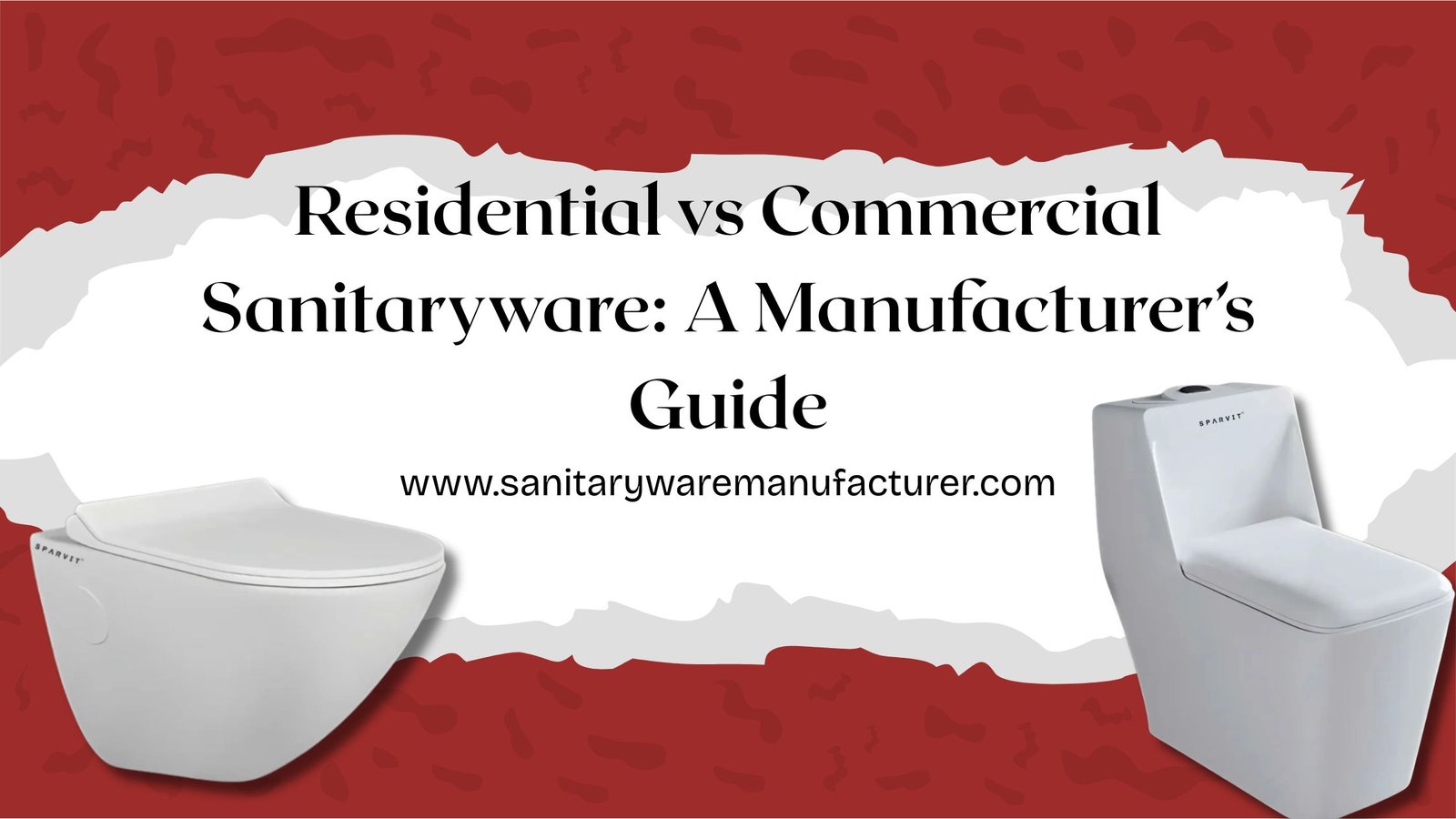
The global sanitaryware industry has witnessed remarkable growth over the past decade, driven by urbanization, rising hygiene awareness, and the rapid expansion of residential and commercial infrastructure. From luxury homes to high-traffic commercial spaces such as malls, airports, hotels, and office buildings, sanitaryware plays a crucial role in maintaining hygiene, comfort, and functionality.
However, the requirements for residential and commercial sanitaryware differ significantly. A product designed for a private home may not perform well in a high-traffic public environment, while commercial sanitaryware solutions may not always align with the aesthetics or comfort expected in residential spaces.
For every Sanitaryware Manufacturer, understanding these differences is essential for designing the right products, selecting suitable materials, and meeting industry standards. Manufacturers must balance durability, design, functionality, and regulatory compliance to serve both segments effectively.
In this guide, we explore the major differences between residential and commercial sanitaryware and what manufacturers must consider when producing products for each market.
Residential sanitaryware refers to bathroom and washroom fixtures designed for private homes, apartments, villas, and residential complexes. These products prioritize comfort, design aesthetics, and space efficiency while ensuring reliable performance for daily use.
In residential settings, sanitaryware products typically include:
Homeowners generally focus on style, finish, and compatibility with bathroom interiors. As a result, manufacturers often emphasize elegant designs, smooth finishes, and a variety of shapes and colors.
Another defining characteristic of residential sanitaryware is moderate usage. A typical household bathroom may be used only a few times per day by a limited number of people. This allows manufacturers to focus more on design innovation rather than extreme durability.
Commercial sanitaryware is designed for high-traffic environments such as:
Unlike residential environments, commercial spaces experience frequent and heavy usage throughout the day. Fixtures must be highly durable, easy to maintain, and resistant to wear and tear.
For a Sanitaryware Manufacturer, this means designing products that can withstand thousands of uses while maintaining hygiene standards and functionality.
Commercial sanitaryware often includes:
Durability, efficiency, and ease of cleaning become the top priorities in commercial sanitaryware production.
Although both categories serve the same fundamental purpose, several factors distinguish residential sanitaryware from commercial sanitaryware.
One of the most significant differences lies in usage frequency.
Residential sanitaryware is used by a small number of individuals within a household. This allows manufacturers to prioritize comfort and aesthetics without needing extremely heavy-duty designs.
Commercial sanitaryware, however, must withstand constant use throughout the day. Airports, malls, and public restrooms may see hundreds or even thousands of users daily.
Therefore, commercial fixtures must be designed with reinforced materials and robust structures that can handle continuous usage.
Durability requirements vary significantly between the two categories.
Residential products typically use high-quality ceramic materials with glazed finishes for aesthetic appeal and durability under normal usage conditions.
Commercial sanitaryware, on the other hand, must be engineered to resist:
For a Sanitaryware Manufacturer, this often means using thicker ceramic structures, anti-bacterial glazes, and high-strength materials to ensure longevity.
Design plays a crucial role in residential bathrooms. Homeowners often view the bathroom as a reflection of their personal style and comfort.
Manufacturers catering to the residential market therefore focus on:
Commercial sanitaryware, however, prioritizes functionality over decorative appeal.
Products are typically designed with simple shapes that allow easy cleaning and minimal maintenance. Aesthetic consistency may still be important in hotels and premium commercial spaces, but functionality remains the priority.
Hygiene standards are significantly stricter in commercial environments due to the high volume of users.
Commercial sanitaryware must be designed to:
Many commercial restrooms also use sensor-based technology to minimize physical contact.
Residential sanitaryware focuses more on comfort and convenience, although modern homeowners are increasingly adopting hygienic solutions like rimless toilets and anti-bacterial coatings.
Water conservation has become a critical factor in both residential and commercial sanitaryware production.
However, commercial buildings often require stricter water efficiency measures due to environmental regulations and high usage.
A responsible Sanitaryware Manufacturer designs products with:
Residential bathrooms also benefit from water-efficient products, but the impact is more significant in commercial spaces where daily usage is extremely high.
Installation requirements also differ between the two segments.
Residential installations are typically designed for smaller spaces and individual bathrooms. Products must be compact and compatible with home plumbing systems.
Commercial sanitaryware installations often require:
Large commercial projects may require coordination between architects, engineers, and sanitaryware manufacturers to ensure proper installation.
Regulatory compliance is another major difference between residential and commercial sanitaryware.
Commercial buildings must meet strict standards related to:
Manufacturers must ensure their products meet these standards to be approved for commercial construction projects.
Residential sanitaryware typically faces fewer regulatory restrictions but still must meet quality and safety standards.
For a Sanitaryware Manufacturer, serving both residential and commercial markets requires strategic product development and manufacturing expertise.
Key considerations include:
Manufacturers must maintain separate product lines tailored to each market segment.
Residential collections should emphasize design innovation and lifestyle trends, while commercial lines should focus on durability, functionality, and compliance.
Material quality directly impacts product performance.
Ceramic sanitaryware remains the most widely used material due to its durability, resistance to stains, and easy maintenance.
Advanced glazing technologies and anti-bacterial coatings are increasingly used to improve hygiene and longevity.
Commercial construction projects often require large quantities of sanitaryware within tight timelines.
Manufacturers must ensure scalable production capacity to meet the demands of both residential retail markets and large commercial projects.
Quality assurance is critical in sanitaryware manufacturing. Even minor defects can affect product durability or installation.
Manufacturers must implement rigorous quality testing processes, including:
These measures ensure consistent product performance across different applications.
The sanitaryware industry is evolving rapidly due to changing consumer expectations and technological advancements.
Some key trends include:
Smart toilets, sensor-based faucets, and automated flushing systems are becoming increasingly popular, particularly in commercial environments.
Manufacturers are integrating technology to improve hygiene and user convenience.
Sustainable manufacturing practices are becoming essential.
Environmentally conscious manufacturers are focusing on:
Sustainability is particularly important for commercial projects seeking green building certifications.
Minimalist bathroom aesthetics are influencing residential sanitaryware designs.
Wall-hung toilets, countertop basins, and compact fixtures are becoming increasingly popular among homeowners and interior designers.
Choosing the right manufacturer is essential for architects, builders, and developers.
A reputable Sanitaryware Manufacturer should provide:
Manufacturers must also adapt to evolving market demands and continuously invest in research and development.
Companies that successfully balance innovation, quality, and sustainability are more likely to lead the industry.
Treating residential and commercial sanitaryware as identical categories can lead to product failures, poor user experiences, and maintenance challenges.
Manufacturers must recognize that each environment has unique requirements.
By developing specialized product lines for each segment, manufacturers can:
Understanding these differences ultimately leads to stronger brand positioning and long-term success.
The sanitaryware industry serves a wide range of environments, from private homes to large commercial facilities. While both residential and commercial sanitaryware share the same fundamental purpose, their design requirements, durability standards, and functionality differ significantly.
For a Sanitaryware Manufacturer, recognizing these distinctions is essential for delivering reliable, high-quality products that meet the needs of diverse users.
Residential sanitaryware focuses on aesthetics, comfort, and personalization, while commercial sanitaryware prioritizes durability, hygiene, and efficiency. By carefully considering these factors, manufacturers can create solutions that perform effectively in their intended environments.
As the demand for modern, sustainable, and technologically advanced sanitaryware continues to grow, manufacturers must remain innovative and adaptable. Companies like Sparvit Sanitaryware are well-positioned to meet these evolving demands by combining quality craftsmanship with modern design and manufacturing expertise.
The future of sanitaryware manufacturing lies in delivering products that seamlessly balance style, durability, hygiene, and sustainability—ensuring better bathroom experiences in both residential and commercial spaces.
Comments are closed